How Ocean Dreams
with Jol Thoms
Seismograf Journal Vol. 33: Sound and More-Than-Human Worlds’ (2025)
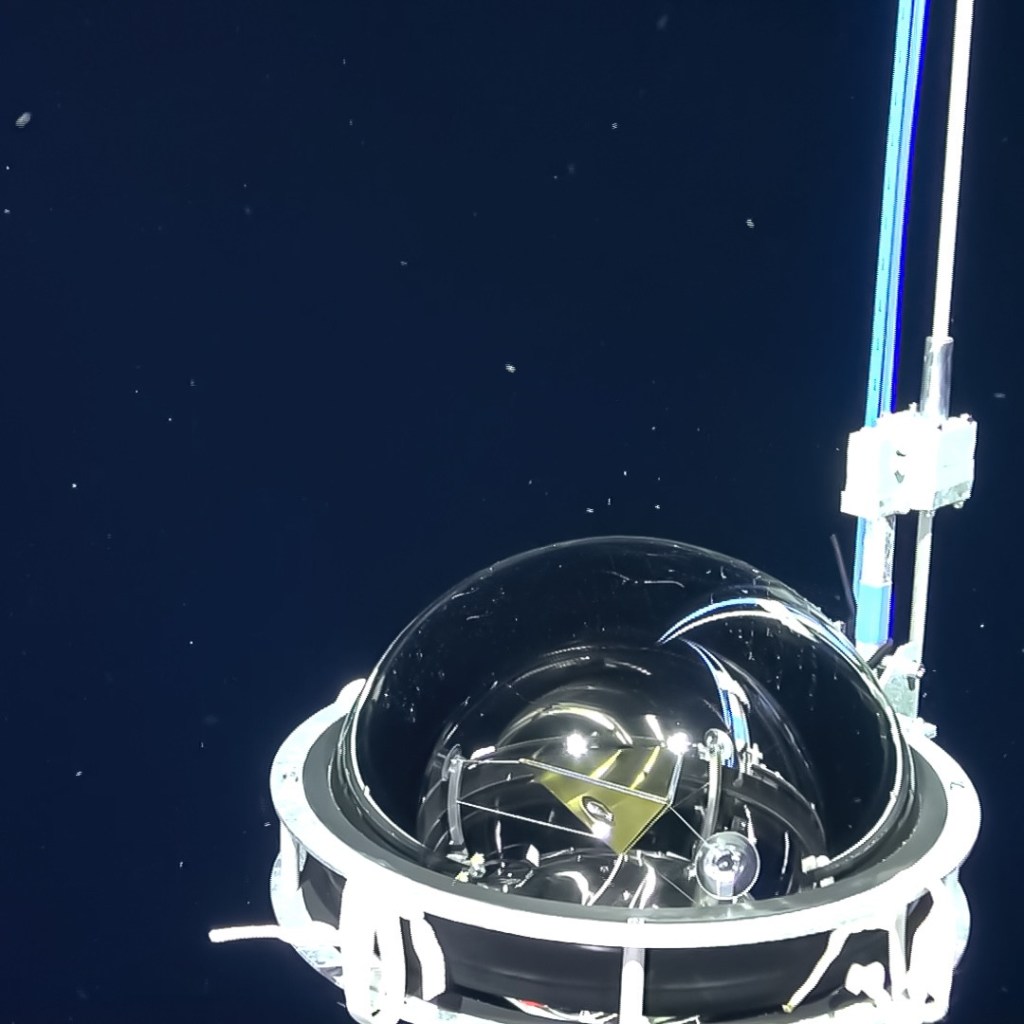
2.6 kilometres below the surface of the Northeast Pacific Ocean, Radio Amnion: Sonic Transmissions of Care in Oceanic Space is submerged as a chimerical anomaly, a sonic platform entangled with an immense physics experiment and a vast oceanographic monitoring station. Attached to a subaquatic telescope that probes anarchic, abundant yet extremely elusive neutrino particles, the SFB1258’s Pacific Ocean Neutrino Experiment (P-ONE) and Radio Amnion are in turn hosted at the »Cascadia Basin node« of Ocean Networks Canada’s (ONC) NEPTUNE Observatory. 300Kms west off the shores of Turtle Island (aka »North America«) this multi-year audio platform and communication device has commissioned and relayed more than 25 unique artists’ compositions deep within – and addressed to – Ocean. During each full moon since 2021, activating scales and senses »beyond-the-human« (Kohn), participants have taken part in telepresent, nonlocal, sono-luminous hydrosocial ceremonies initiated at the lunar-clock and portal https://radioamnion.net – Ocean is transcendental in that they are one of the prime conditions for the possibility of complex planetary life. Their dire and tumultuous conditions under industrial, extractive and monopoly capital include rapid die off, eutrophication, darkening, heating, and acidification. These in turn lead to cataclysmic events like an oversaturated Ocean that can no longer heat or carbon sink, as well as expectations for Atlantic Meridional Overturning Conveyor (AMOC) collapse (Ocean current collapse leading to unknowable climate and weather system disintegration). As a site for ecological grief and reprieve from hegemonic Western beliefs, Radio Amnion (RA) is an extension of an unprecedented opportunity to enter into a vast, distant and otherwise unreachable abyssal zone where physicists scry the depths for a rare neutrino’s superluminal cascade. In this audio-paper extracts from Amnion compositions alongside excerpts from Stanislaw Lem’s science fiction masterpiece Solaris (1961) punctuate this development of the Quantum Ecologies project of Thoms’ PhD on »Landscape-Laboratories« (2021). Here we advocate for the re-enchantment and decolonization at sites of scientific knowledge production where »pluriversality« (Escobar) should be fundamental. By listening from a »cosmopolitical« (Stengers) perspective, this investigative array of vibratory thought explores how commissioned RA artists have approached Ocean through rites of sonic meditation, sonic fiction, and (watery) materiality.
Listeninging for Mermaids: The otherworldly life of Lewisham’s Rivers
with Dr. Louise Rondel and Dr. Emma Jackson
Seismograf Journal Vol. 33: Sound and More-Than-Human Worlds’ (2025)
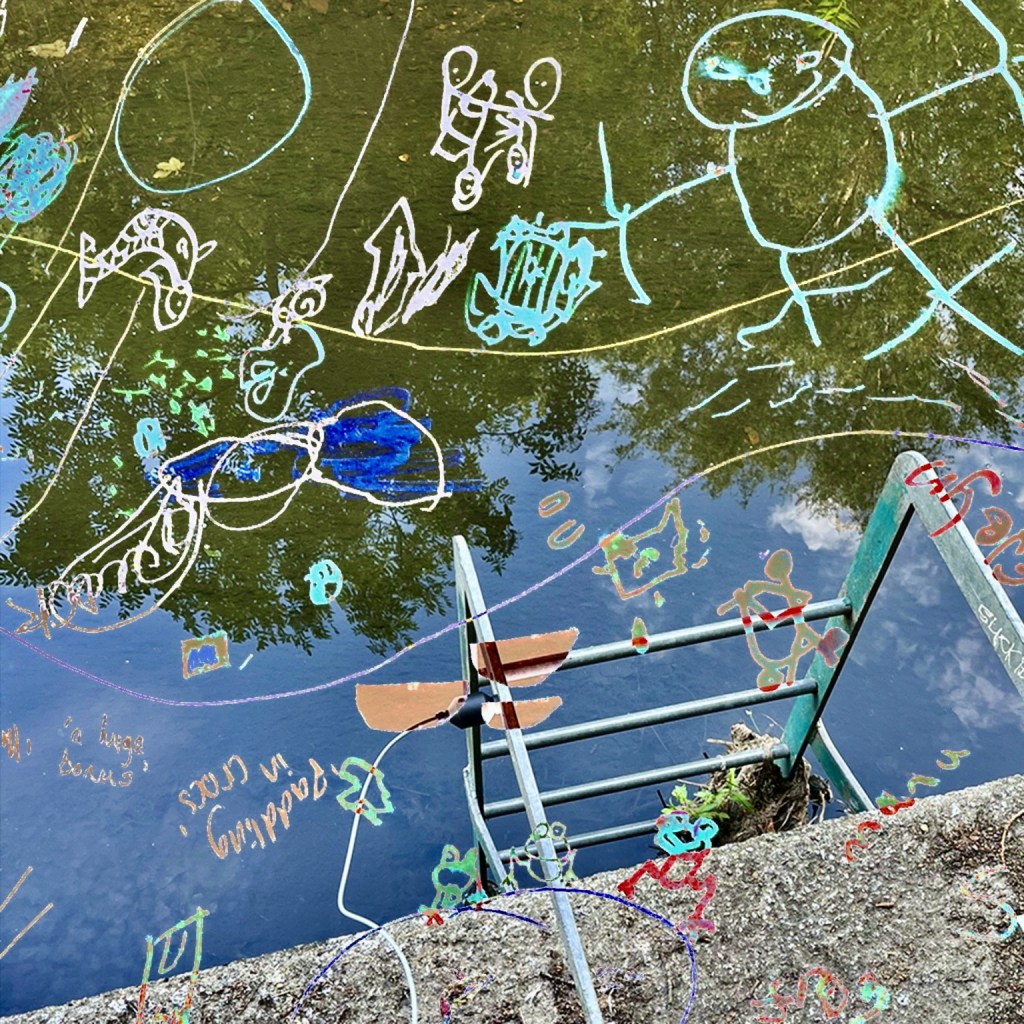
Along and in the rivers of Lewisham in south-east London, we hear stories of mermaids, treasure chests, crocodiles and, dwelling in a dark corner of Deptford Creek, the Necker, some say a merperson or a serpent.
In this audio paper, we explore these ethereal and slippery stories through listening to the landscape, examining the role of sound in the ongoing process of producing places (Massey, 1994). We consider how sound conjures the imagined mermaids and other watery creatures and foregrounds the pluralities and possibilities of places (Voegelin, 2021). In a reciprocal feedback loop, sounds give rise to certain imaginings and, once imagined, these sounds confirm the existence of what we think or know we heard.
The imaginings are intimately tied in with everyday forms of place-making along Lewisham’s rivers – picnicking, graffiti-writing, playing and birdwatching. They are also a response to the liminality of such spaces; concerns about safety after dark or uncertainty about what is in or under the water equally giving rise to mythical creatures.
In turn, the imaginings layer onto the multiplicity of trajectories and practices intersecting to create places (Massey, 2012). Entwined in this are the landscape’s sounds – field recordings, interviews, and music that the rivers recalled to us. Sounds which are not echoes of places but active in their production.
Through the sonic personae of mermaids, we suggest listening confluently to grasp sound’s role in texturing the rivers’ ambiguous and otherworldly qualities. Like the confluence of two streams of a river, listening confluently opens a crack in any notion of place, allowing other stories to issue forth.
Along and in Lewisham’s rivers we invite (in fact, impel) you to listen confluently; to listen for mermaids and the places in which they dwell.
Spiralling Out of a Shell: Fictioning more-than-machine listening
Organised Sound Journal Vol 29: More-Than-Human, More-Than-Music (2024)
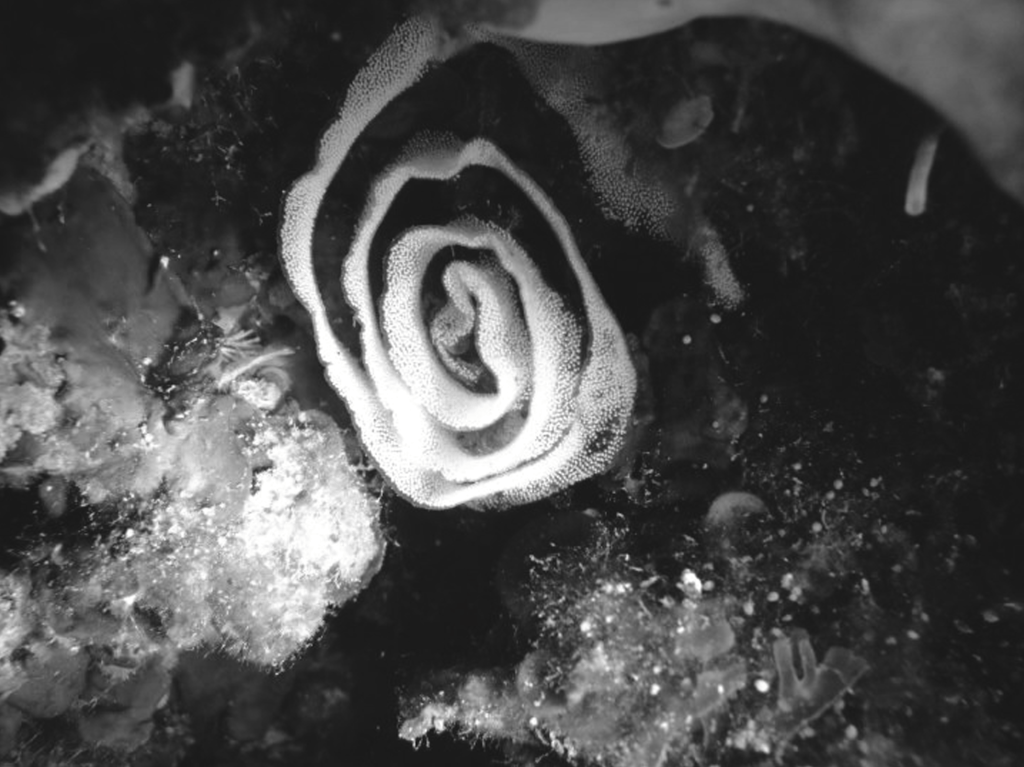
This article critiques the anthropocentric tendencies in machine listening practices and narratives, developing alternative concepts and methods to explore the more-than-human potential of these technologies through the framework of sonic fiction. Situating machine listening within the contemporary soundscape of dataveillance, the research examines post-anthropocentric threads that emerge at the intersection of datafication, subjectivation and animalisation. Theory and practice interweave in the composition of a music piece, The Spiral, enabling generative feedback between concept, sensation and technique. Specifically, the research investigates the figure of a mollusc bio-sensor between science fact and fable, as the (im)possible locus of musicality. This emergent methodology also offers new insights for other sound art and music practices aiming to pluralise what listening might be.
 Konstantinos Damianakis